Bulut CNC Makina Corporate Website
The corporate website of a machining company. Built on WordPress, published in eight languages, presenting the product portfolio in filterable groups and structured so the company can maintain it itself.
The problem it solves
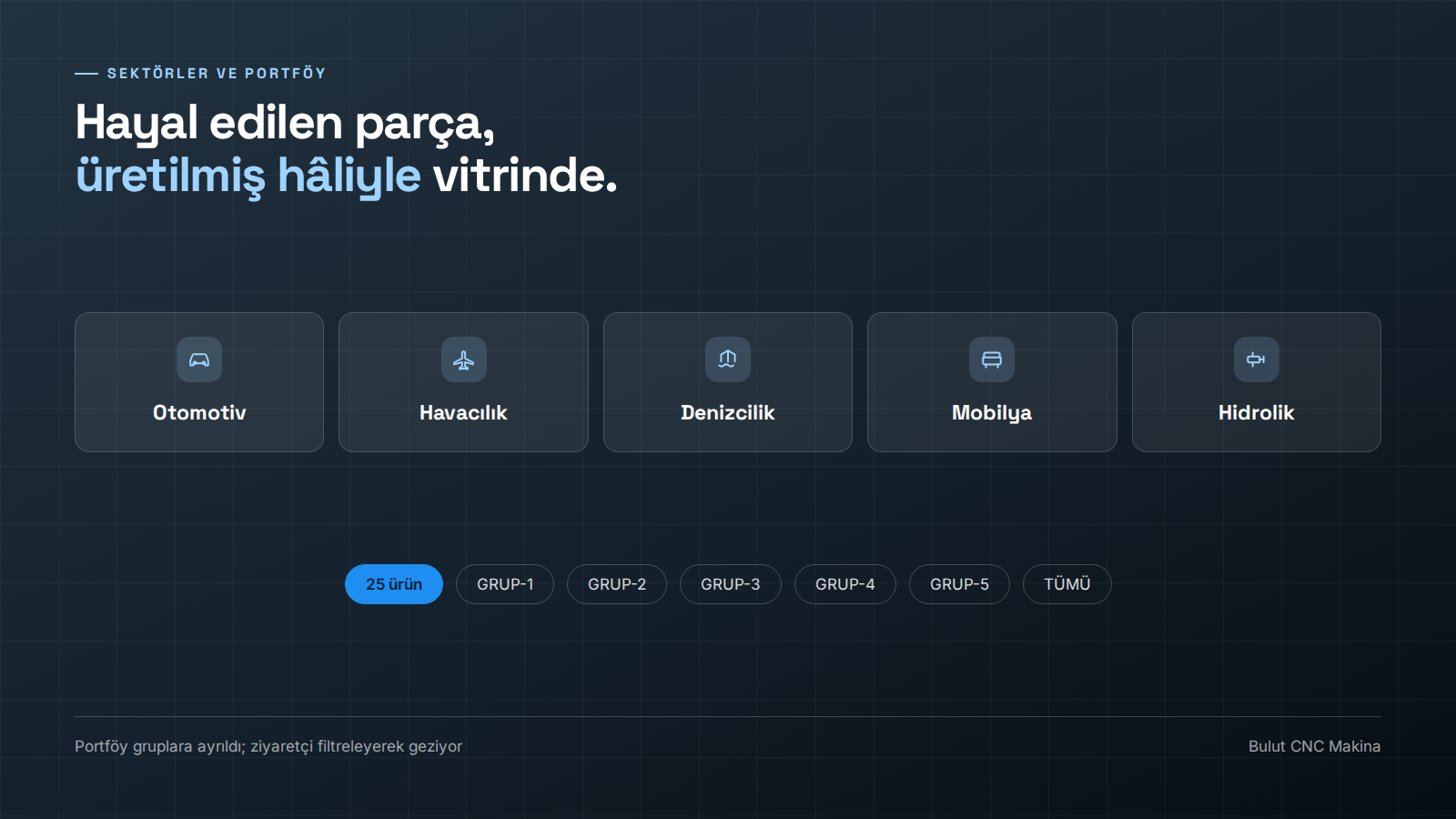
Bulut CNC Makina is a manufacturer producing technical parts in a range of material grades; it sums up its work in the phrase "machining is our business" and follows the Kaizen principle of continuous improvement. What is expected of such a company's website is not long paragraphs but the work itself: which sectors it serves, which parts it has produced before, and how to reach the company. I therefore designed the site around visuals and short routes. The home page greets visitors first with the sectors served — automotive, aviation, marine, furniture and hydraulics — and then takes them down to the portfolio of parts already produced. The menu was deliberately kept plain: Home, Our Company, Portfolio and Contact. A "Get in touch" prompt stays within reach at every point on the page, because for a company like this a visit translates directly into a quotation request.
What it offers
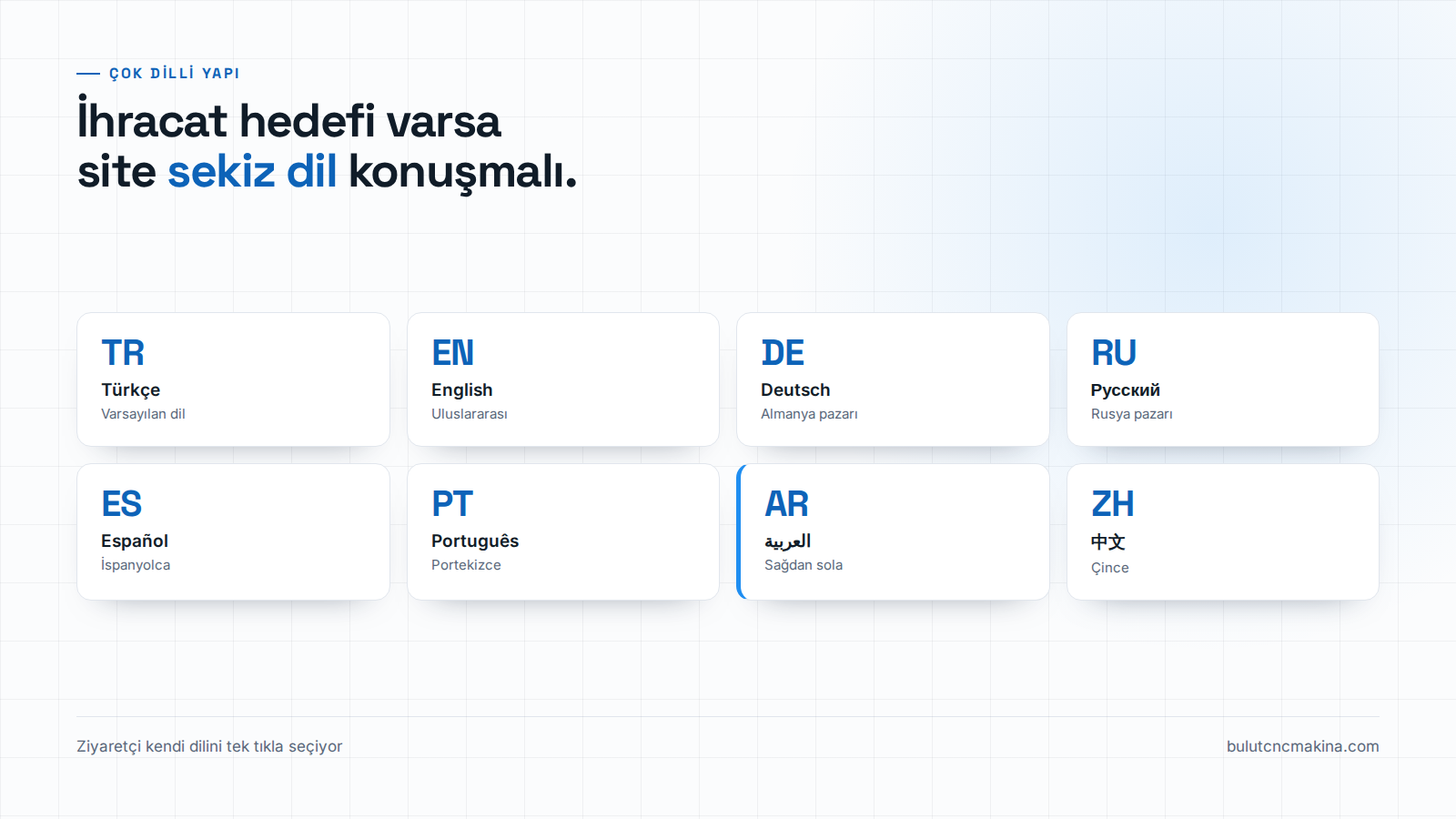
The defining feature of the project was its multilingual structure. Since the company also works with customers abroad, the site is published in eight languages: Turkish, English, German, Russian, Spanish, Portuguese, Arabic and Chinese. As Arabic is written right to left, particular care was taken that the interface reads correctly in that language too. Visitors can switch to their own language in a single click, which makes it considerably easier for the company to present itself in export correspondence. On the portfolio side, twenty-five products were divided into five groups and turned into a filterable gallery; visitors can pick the group they are interested in and see only those parts, or list them all on one screen. The contact section brings together a telephone number, a general email address, a separate address for export enquiries, and a map integration.
Technical approach
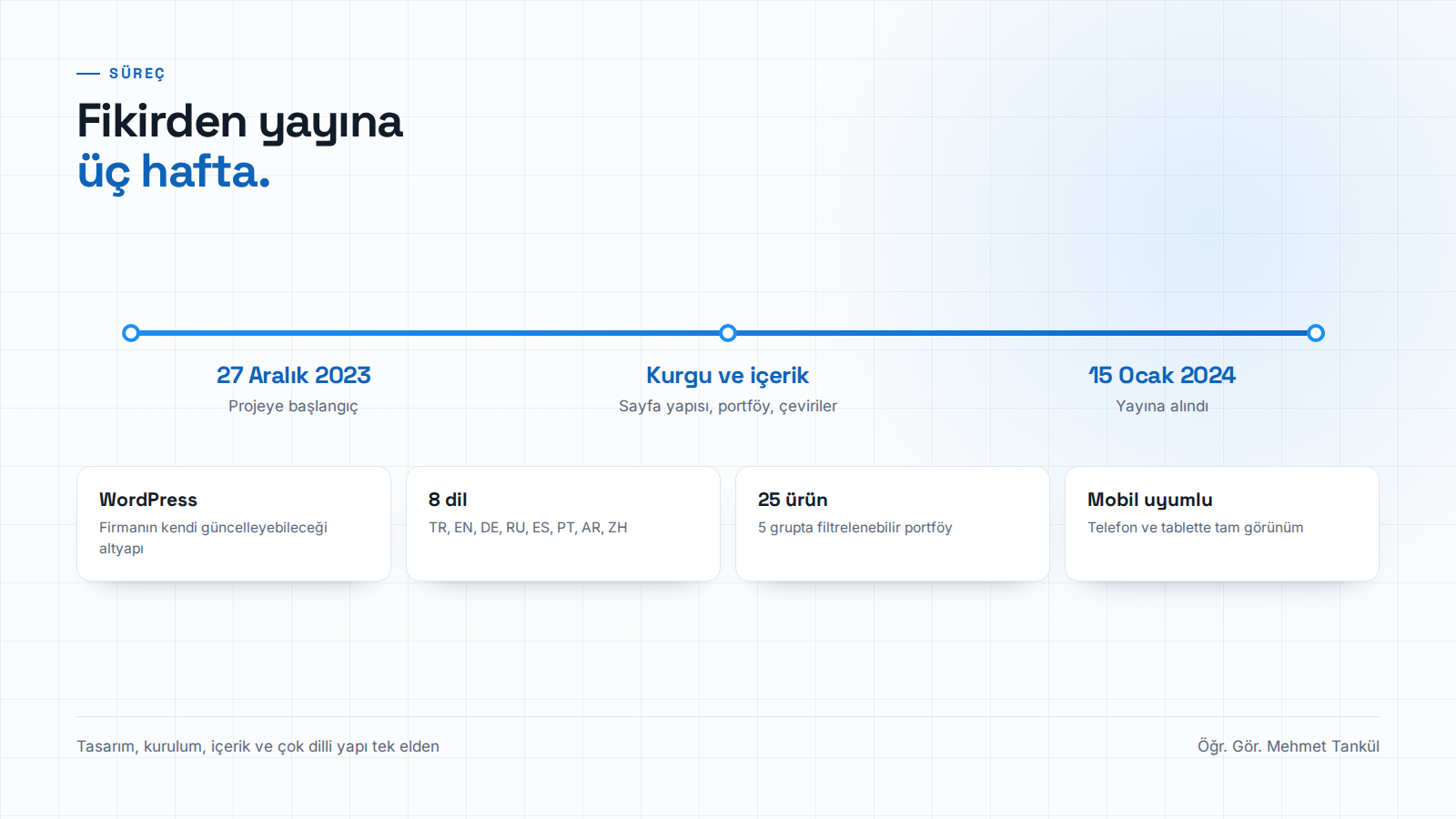
WordPress was chosen as the platform, because after handover it would be the company itself — not a developer — updating the site. Adding a new product, changing a piece of text or replacing an image takes a few clicks in the admin panel. Page layouts were built with a drag-and-drop page builder, and the animated area at the top was left as a manageable component. The design was mobile-first from the outset, since a significant share of traffic on sites like this comes from phones. The project began on 27 December 2023 and went live on 15 January 2024: design, setup, content placement and all eight languages were completed in roughly three weeks.
From the project