Corporate Hospital Website
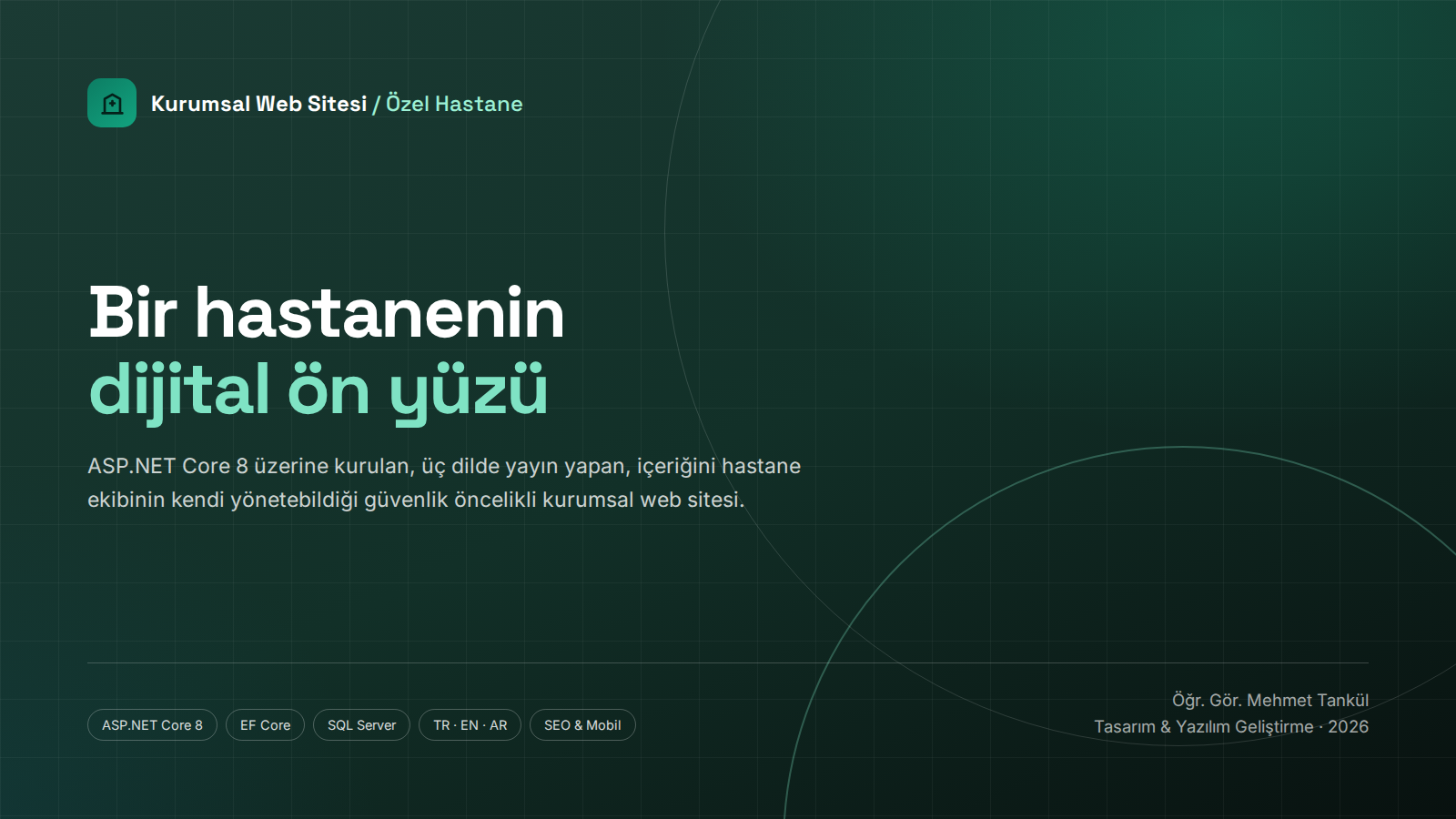
A corporate website for a private hospital, built from scratch on ASP.NET Core 8: published in three languages, maintainable by the hospital's own team, and designed around security and mobile readability.
The problem it solves
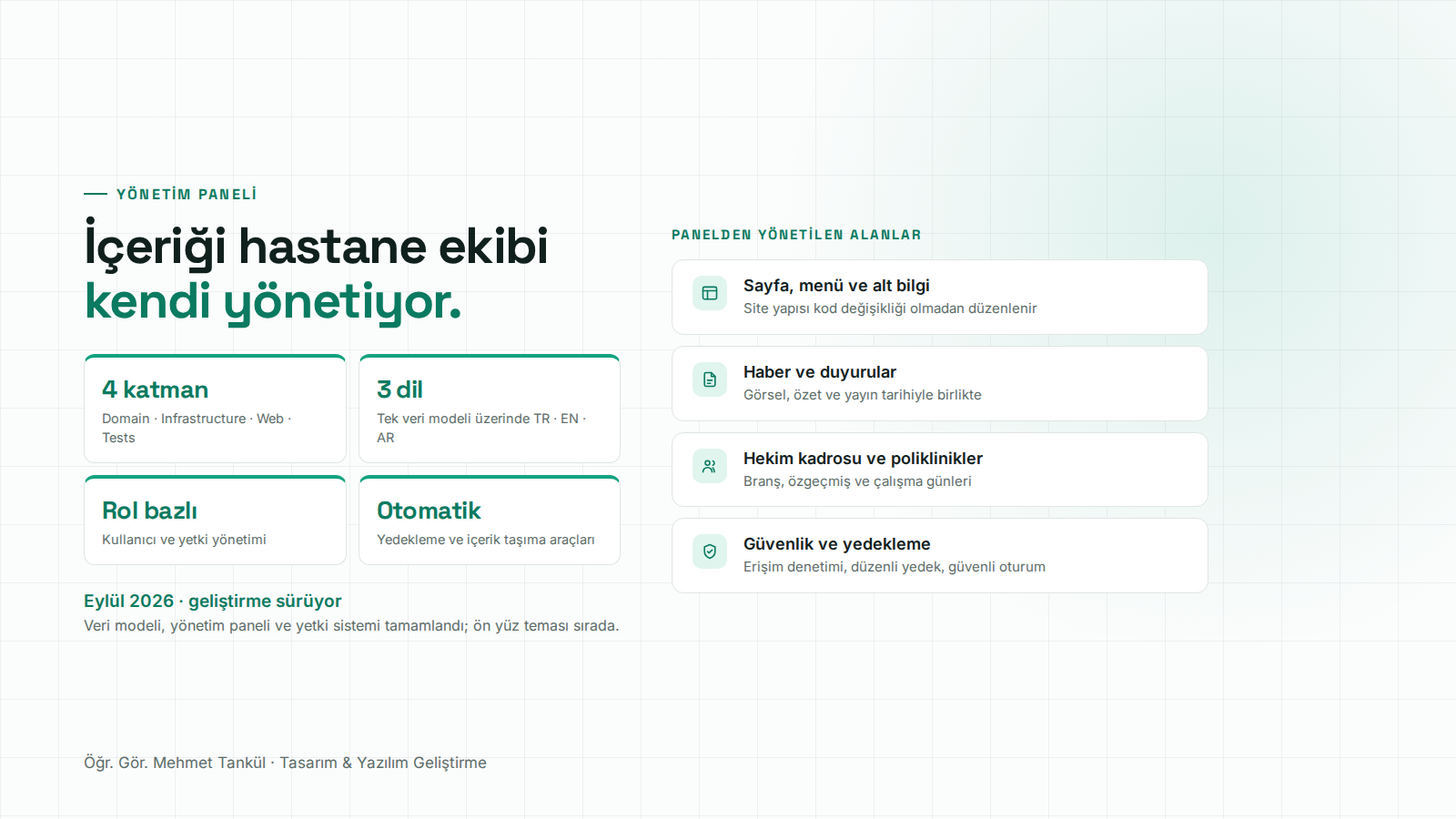
A hospital's website is usually the first face of the institution people meet: patients look at it before booking an appointment, asking for directions or searching for a doctor. My aim in this project was not merely a visually refreshed site but, above all, a maintainable one. Most corporate sites look good in the first month and start ageing by the sixth, because nobody can be found to update the content. So I started with the content model rather than the design. The site is built on ASP.NET Core 8 with Entity Framework Core and SQL Server, and the solution is split into four layers: Domain, Infrastructure, Web and Tests. Business rules stayed independent of the interface, testability improved, and the cost of future development fell. Once the site is handed over, the institution will be able to keep it alive without needing a developer.
What it offers
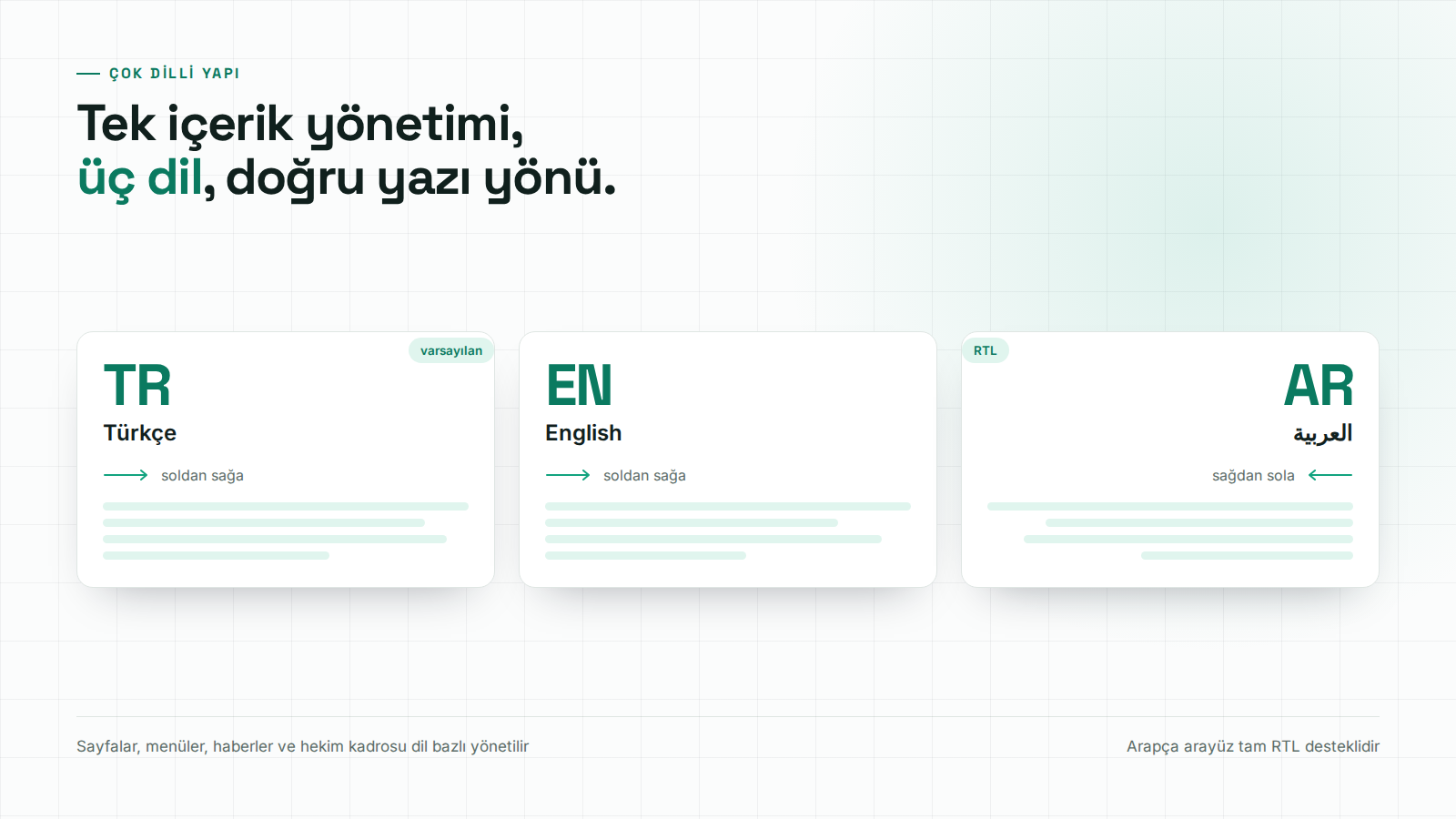
The site's most distinctive feature is its trilingual structure. Turkish is the default language, with English and Arabic as fully supported second languages, and the Arabic interface works correctly right to left (RTL). Pages, menus, news and the medical staff directory are managed per language on a single data model: adding a doctor does not mean entering the record three times, only filling in the translation fields of the same record. The admin panel manages pages, menu and footer layout, news and announcements, the medical staff directory and outpatient clinics, users and role definitions, and backup and content-migration tools. Because authorisation is role-based, IT staff and the communications staff who enter content can use the same panel with different permissions. On the security side, access control, secure session management and regular backups were planned from the outset.
Technical approach
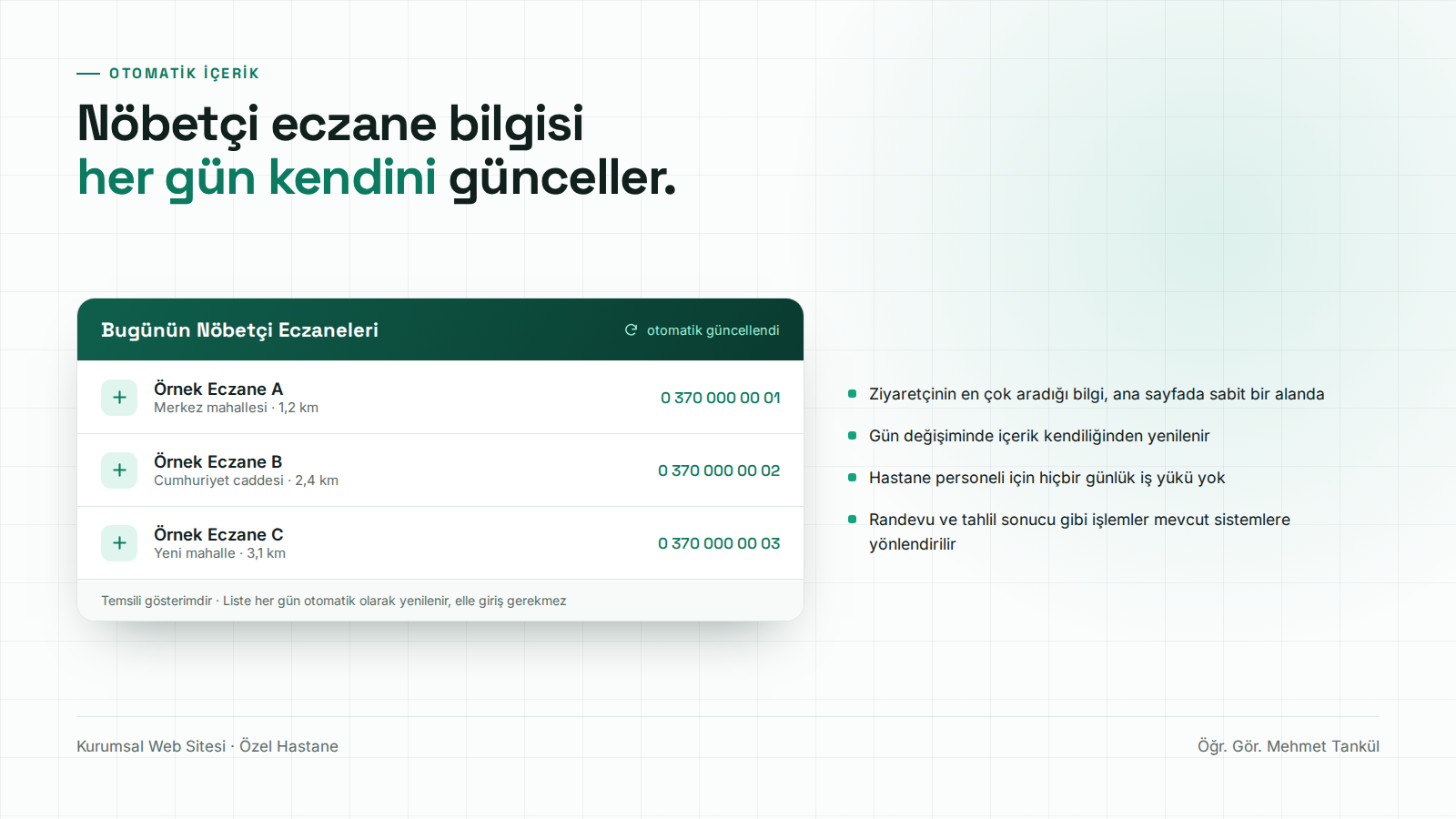
I drew the scope boundary deliberately. Appointments and test results run through the hospital's existing systems, so they were not rebuilt on the site; visitors are simply directed to them. On the other hand, one of the things visitors look for most — the daily on-duty pharmacy list — was added as a self-updating section. When the day changes the list refreshes on its own; nobody has to type it in every morning. The visitor sees a site that is always current, and the institution carries no daily workload. Search-engine visibility and readability on a phone were not headings added later either; they were the starting point of the design. As of September 2026 the data model, admin panel, role and permission system, trilingual content structure and the migration tools for content from the old site are complete; work continues on the front-end theme.
From the project